Klara Zimmermann · 5 November 2026
Dark Skies Over Woldgate Draw Amateur Astronomers to Yorkshire Wolds for Monthly Gatherings
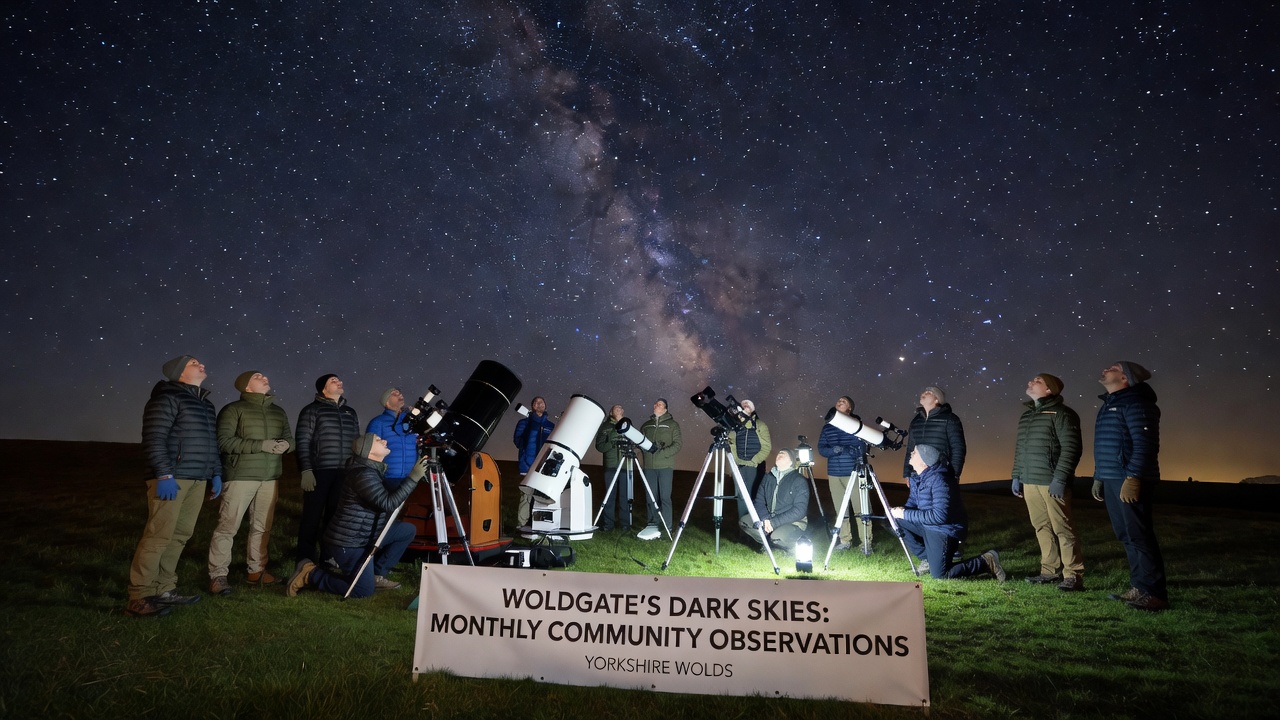
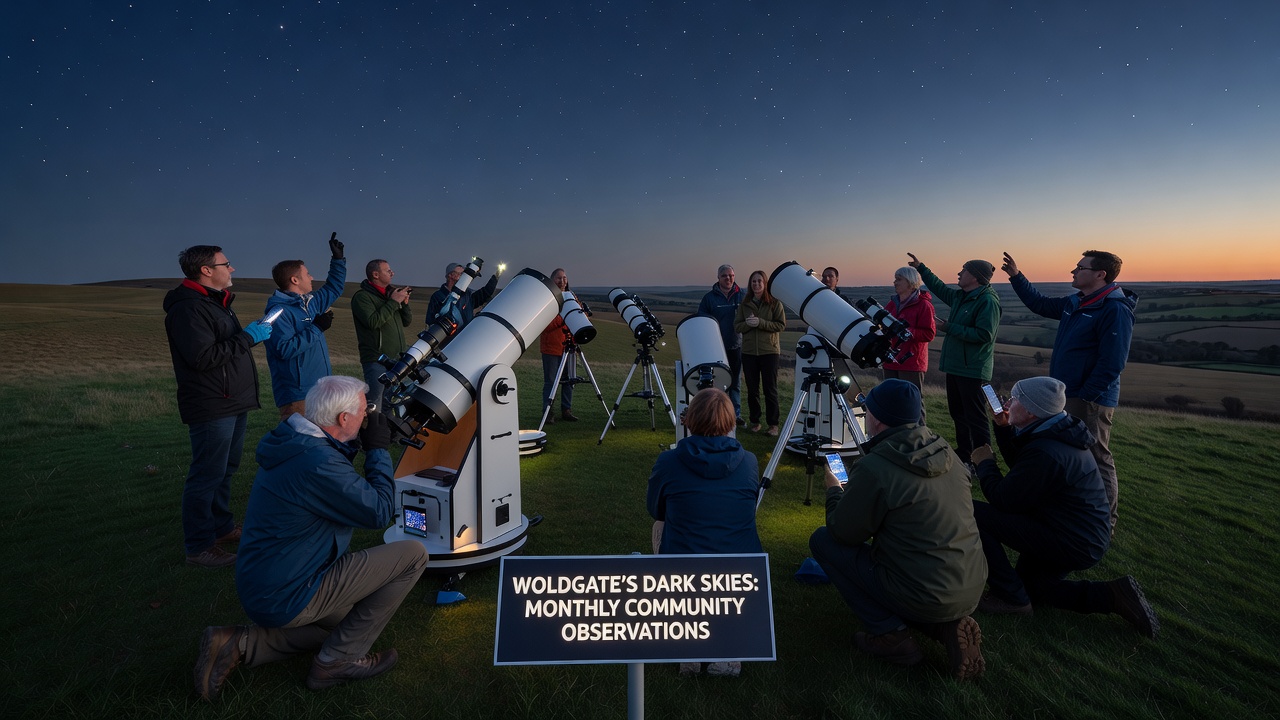
Clear night skies above the Yorkshire Wolds have long supported astronomical observation, and Woldgate serves as a focal point for monthly community events that bring together amateur astronomers from across the region. These gatherings take place on designated weekends when weather conditions allow optimal viewing, with participants assembling equipment such as telescopes, binoculars, and star charts to track celestial objects including planets, star clusters, and occasional meteor showers.
Geographic Advantages Supporting Observations
The Wolds landscape features low light pollution levels compared to nearby urban centers, which creates conditions suitable for viewing faint objects that remain hidden in brighter environments, and this advantage stems from the area's rural character along with elevation variations that reduce horizon obstructions. Data from dark sky monitoring initiatives indicate that parts of the Yorkshire Wolds maintain Bortle scale ratings between 3 and 4, ratings that permit detailed observation of the Milky Way and numerous deep-sky targets during favorable periods.
Monthly sessions typically begin in the early evening hours and continue through the night, with organizers coordinating locations along established routes near Woldgate to accommodate varying group sizes, and these events draw participants ranging from beginners who receive guidance on basic equipment setup to experienced observers who contribute logs of variable star brightness or planetary features. November 2026 sessions, for instance, align with the Leonid meteor shower peak, allowing attendees to combine meteor counting with other targets such as Jupiter's moons and Saturn's rings.
Community Participation and Equipment Trends
Attendance records maintained by local astronomy groups show steady growth in participation over recent years, with sessions often attracting between 20 and 50 individuals depending on the season and forecast, and this increase correlates with broader public interest in astronomy fueled by accessible online resources and affordable telescope options available through retailers. Participants frequently share findings through group discussions, comparing notes on objects such as the Andromeda Galaxy or the Orion Nebula while using apps for real-time positioning assistance.
Equipment choices vary widely during these events, ranging from portable refractors mounted on tripods to larger Dobsonian reflectors that require vehicle transport, yet all setups emphasize portability and ease of alignment under dark conditions. Workshops held at the start of each session cover topics like polar alignment techniques and filter selection for light pollution reduction, providing practical skills that attendees apply immediately during the observation period.
Coordination with Regional and Scientific Networks
Local organizers maintain connections with established astronomy organizations, including the Royal Astronomical Society, which supplies educational materials and occasional guest speakers for community events, while similar partnerships extend to international bodies such as the International Dark-Sky Association that provides guidelines on preserving observation conditions through reduced artificial lighting. These collaborations ensure that monthly gatherings incorporate current data on solar activity cycles and satellite tracking information relevant to amateur observers.
Weather monitoring plays a central role in scheduling decisions, with advance forecasts reviewed to select nights offering stable atmospheric conditions and minimal cloud cover, and historical records from the Yorkshire Wolds reveal that autumn and winter months often deliver the clearest skies due to lower humidity levels. November 2026 observations, scheduled around the new moon phase, will incorporate sessions focused on lunar occultations alongside standard deep-sky targets.
Documentation and Data Collection Practices
Many participants contribute to citizen science projects by recording observations that feed into larger databases maintained by professional astronomers, including measurements of variable stars submitted through platforms coordinated by groups like the American Association of Variable Star Observers. This practice transforms recreational gatherings into opportunities for meaningful data contribution, with Woldgate sessions producing consistent reports on objects visible from the northern hemisphere during each season.
Photography has become an integral element of these events, with attendees capturing long-exposure images of nebulae and galaxies using digital cameras attached to telescopes, and resulting images often circulate within regional forums to document sky conditions over time. Such visual records help track changes in light pollution and support advocacy efforts aimed at maintaining dark sky status for the Wolds area.
Conclusion
Monthly observation events at Woldgate continue to serve as a hub for amateur astronomers seeking reliable access to dark skies in the Yorkshire Wolds, supported by geographic features, coordinated scheduling, and connections to broader scientific networks. As November 2026 approaches, upcoming sessions will build on established patterns of participation and data sharing that have characterized these gatherings in previous years.